

 Menu
Menu
Number Portability Information Center
Wireless number portability has been available for several years. The early wrinkles have been ironed out, and most wireless purchases involving number portability now go very smoothly.
Number portability has made it much easier for cell phone subscribers to change carriers, and has forced the carriers to compete more fiercely on customer service and network quality. As a result, wireless service is becoming more like a commodity, and this has manifested itself in rate plans that are not all that different from carrier to carrier. It has also led to a consolidation among cell phone providers (only four national carriers remain) and pricing and service changes that encourage subscribers to stay with their carrier (e.g., two-year contracts and free mobile-to-mobile pricing).
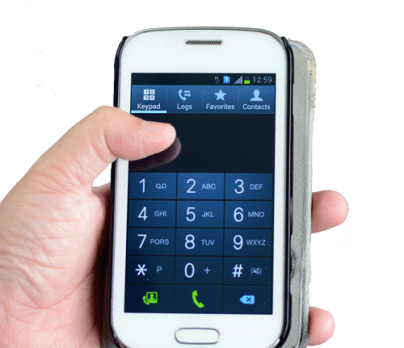
Being informed of how the number portability rules work will help things go more smoothly for you when you are ready to transfer your number. Here are some important rules to keep in mind:
- Most Important: Sign up with your new carrier before you cancel your old service. If you cancel your existing service first, you may not be able to transfer the number. Once the process is complete, service to your old phone should be automatically disconnected.
- You can port your number to another carrier even if you are under contract. However, you must still honor the terms of your contract, which in this case probably means a contract termination penalty.
- You can port your number even if you still owe your current carrier money. However, this does not release you from that obligation.
- While your number is portable, your phone usually isn't; in most cases, you'll need to get a new one.
- You can port your number between wireline and wireless numbers. Keep in mind that while wireless ports can take as little as a couple hours, wireline-to-wireless moves may take several days.
- Portability is local. This means, for example, that if you have a Boston number on your cell phone but move to Miami, you generally won't be able to port it directly with a Miami carrier.
- Prepaid numbers are portable as are fax numbers; 800 numbers and pager numbers are not portable.
- To be eligible to port a number, you must be the primary account holder. So, for example, if your service is in your company's name, you will not be able to transfer that number.
- During the porting process, your ability to call 911 may be impacted. As you transition between carriers, it is possible that 911 calls may be relayed incorrectly.
Number Portability: Frequently Asked Questions
We have compiled a list of common questions about number portability. If we don't answer yours, feel free to contact us.
FAQs
What is Wireless Number Portability?
Historically, when someone switched wireless providers, they were required to change their phone number. Wireless number portability makes phone numbers portable between carriers, thus enabling customers to take their phone numbers with them.
When did Portability Begin?
Portability has been a goal since the Telecommunications Reform Act of 1996, but was postponed several times at the request of the wireless industry. Number portability finally arrived on November 24, 2003 for the top 100 markets. This comprised about 62% of the US population, but only a tiny portion of most states was covered at that time. Portability arrived for the rest of the country on May 24th, 2004.
Where is Portability in Place?
Number portability is now effective throughout the United States. However, it is local. This means, for example, that you can't move from New York to Chicago and activate the number in Chicago as a local number.
Can I Switch to a Carrier Not Licensed in My Area?
No. This will mostly be an issue for companies with locations across multiple cities, who might want to port all their numbers to a certain carrier. Those requests that are ineligible will not be filled.
Can I Port My Number to an Existing Wireless Account?
No. You must port to a new account. If you try to port your current phone number and you are not setting up new service, your port request will be declined.
What About Prepaid Wireless, Fax, 800 Numbers, or Pager Numbers?
Prepaid numbers are treated like any other wireless number, although it must be active when the number is transferred. You will lose whatever purchased airtime remains on the phone at the time of transfer. Note that some prepaid carriers are not accepting ported numbers. Fax numbers are portable. 800 numbers are not portable. Pager numbers are not portable.
What About Family/Share Plans?
While portable, these accounts will be more logistically difficult to get transferred. The person filling out the port request must be the primary account holder (matched Social Security Number). Authorized users (other users on a family plan) cannot port their numbers. If you are an authorized user, you will need to establish separate service with your current carrier, and then initiate a regular porting request.
How Long Will it Take to Transfer a Number?
The FCC and the wireless industry have agreed on a wireless-wireless goal of 2 1/2 hours or less. Wireline-wireless portability may take up to four business days. The kinks have been worked out of the system, so most transfers work pretty smoothly.
How Can I Make the Process Smoother for Myself?
Your new carrier will need to match name and other information with your old carrier. Mismatches will mean delays. To expedite things, you should provide a copy of your current wireless bill to your new carrier. Are Numbers Portable Between Wireline and Wireless Phones? On November 10, 2003, the FCC issued rules requiring portability of home/wireline phone numbers to wireless phones. As with wireless, implementation was staged, with the top 100 markets effective on November 24th, and the remainder on May 24th, 2004. The FCC ruled that porting is required "where the requesting wireless carrier's coverage area overlaps the geographic location in which the wireline number is provisioned." Importantly, this includes transfers that are not within the same rate center, which are the very small geographic areas where wireline to wireline portability had previously been allowed.
Will Portability Let Me Break My Contract?
No, you will still have to honor the terms of your contract, and your carrier can charge you termination penalties defined in your contract if you cancel your service before your contract ends. However, the FCC ruled that a carrier cannot prevent a subscriber from leaving, even if they have an outstanding bill balance. So, while you would still be responsible for any unpaid balances (either billing or termination fee), this will not prevent you from leaving your current carrier.
Will I Be Charged for Porting My Number?
Carriers are allowed to charge a small amount to process the porting, although none are doing so due to competitive pressures.
Can I take My Current Phone to My New Carrier?
In most cases, no. US carriers operate under a variety of incompatible digital technologies, making phone transfer difficult. Additionally, since cell phones are usually sold at a subsidized price (i.e., a consumer pays less for the phone than it actually costs the carrier to buy it), most phones come programmed in such a way as to only work with a single carrier. However, if you haven't looked at phones in the past year, you will be pleasantly surprised at the advanced features that now are in phones that can be had for free or a very low price. If you do choose to switch, you should be able to find a new phone that is superior to your current one. To check out current phone pricing, see our interactive phone finder at www.myrateplan.com/cellphones.
What Will Happen Behind the Scenes When I Change Carriers?
This will vary by carrier, but essentially this is what will happen.
What Should I Do First: Sign up with new carrier, or cancel old service?
You should sign up with the new carrier and complete the porting process before you cancel service. If you cancel your existing service first, you may lose the ability to transfer the number. You should continue to use your current phone until your new service is fully activated, at which time service to your old phone should be automatically disconnected.
I'm a Verizon (for example) customer, and found a good price for a Verizon phone on MyRatePlan. Can I get that offer and keep my number?
The answer is no on both fronts. There are really two separate issues here but they are tied together by the fact that once you sign up for a carrier's service (regardless of what retailer you bought your phone and signed up for service through), you are that carrier's customer. This means that you can't take advantage of the new customer phone offers you see online (i.e., discounted phone prices) unless you are adding a new line of service. Even if you could, this wouldn't be a number portability issue, as there would be no reason to transfer your number within the same carrier.
Can a carrier refuse my transfer request?
A carrier can't prevent you from taking your number, but there is no corresponding requirement for your new carrier to accept it. Obviously, your new carrier has a financial incentive (getting you as a customer) associated with porting your number, so this isn't usually an issue. However, we have found that some prepaid carriers have told prospective subscribers that they can't bring their numbers with them.
What Carriers Benefit the Most from Portability?
Those carriers that have a reputation for good coverage will likely have the easiest time attracting those looking to switch. Since wireless quality is essentially a local issue, carrier reputation can be somewhat different from place to place. In general, the larger carriers benefit from number portability, as their national scope gives them some major advantages in securing larger business customers and mobile consumers. Much like in the banking industry, the smaller players will have to rely on better customer service and local marketing efforts to gain an edge.
Does Portability Impact 911 Calls at All?
Possibly. During the porting process, as you transition your number between carriers, it is possible that 911 calls may be relayed incorrectly. It is just a function of the technology involved to make the transfer. The FCC has ruled that carriers will not be liable for this.